Elmslie reflects on growth, challenges as he prepares to leave mayor’s office
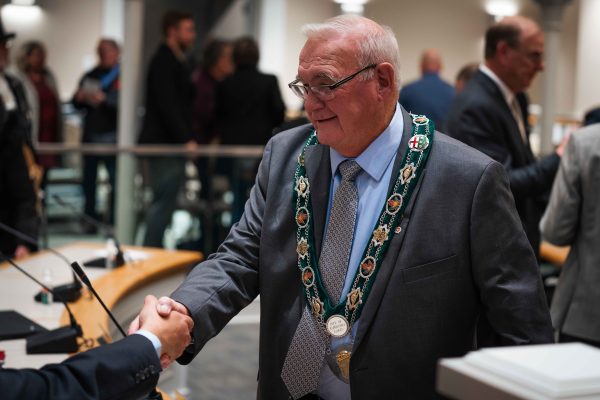
Doug Elmslie says “different people will have different opinions” when reflecting on his term as Kawartha Lakes’ mayor.
But as he prepares to leave office after four years, there are things Elmslie said he hopes people will remember about him: that he listened, cared about the community and tried to do what he believed was right – rather than what was politically popular.

“I’d like to think that I left (the city) better than I found it,” Elmslie told Kawartha Lakes Weekly.
Elmslie’s four years in the mayor’s office saw the city deal with significant growth, major infrastructure projects and many other initiatives.
Looking back on his mayoral term, Elmslie, whose municipal career began in 2006 when he was elected Ward 6 councillor, said there were a number of things he was proud to see council accomplish.
Among them was increased capital investment, which he said is helping the city deal with growth that is already here and more that is coming.
The Colborne Street Bridge project was one example, with Elmslie noting that the project has received approval and is slated to start in late 2026.
He also pointed to the city’s work to consolidate 14 separate rural zoning bylaws into one, a process that remains before the Ontario Land Tribunal. The goal is to create more consistent rules for land use and development across the city’s rural areas.
The city’s strategic plan was another accomplishment, Elmslie said, noting that council is “almost finished” what it set out to do, with only a couple of items still outstanding.
But one accomplishment the city made during his term stands out because of how much the municipality had to deal with at once: the response to a series of extreme weather events in 2025.
“I cannot ignore 2025 and the ice storms, fire, droughts and significant snow events, and the way we were able to deal with that – and the (support) of our residents in helping us deal with it, I think, was a fantastic accomplishment,” Elmslie said.
Elmslie also said he was proud of the way the city has responded to homelessness, adding that council has addressed the issue “with dignity and respect,” while working to find shelter for those who wanted it during periods of severe weather.
Health care was another area where the city has made progress during the past four years, Elmslie said, citing the addition of after-hours clinics that give residents another option when they need medical attention, which, he added, helps reduce pressure on Ross Memorial Hospital’s emergency department.
And after years of discussion, Elmslie said Walmart’s commitment to opening a store in 2028 was another accomplishment for the city, saying councils dating back decades can take some credit for finally getting the retail giant to commit to a timeline.
When asked what he wished he had accomplished during his time as mayor, Elmslie had one answer at the top of his list: a GO Transit link.
Not establishing a link between Kawartha Lakes and the Oshawa GO station during his term was, he said, a “huge disappointment.”
“I spent hours and hours in meetings and discussions with the province, and with Metrolinx, and the minister of transport, and anybody I could talk to about getting the link, and we have not been successful,” Elmslie said, adding the city continues to look at what can be done to establish a GO link.
Rural transportation was another area where Elmslie said he wished progress had come sooner, although he expects it will improve gradually in the future.
Elmslie also pointed to commercial growth as an area where he would have liked to have seen more progress during his term. While Kawartha Lakes has continued to experience residential growth, Elmslie said commercial development has not kept pace – something he believes is needed to help offset property tax increases.
But the city’s growth has also changed the way council has had to approach its work, he added.
The need to accommodate new development has meant increased capital spending, while the city continues to look at how it can manage growth and make the most of provincial and federal programs, Elmslie said.
The outgoing mayor also said there has been a greater emphasis on consulting the public on major projects and decisions.
“It seems that we need to continually consult with the public and others on major projects and decisions – that wasn’t so prevalent, it seemed, before COVID, but now it seems that everybody wants to be involved, and so we’re doing a lot more consultation on these major issues and on major projects,” he said.
Deputy Mayor and Ward 8. Coun. Tracy Richardson said she believes Elmslie will be remembered most for his leadership during a time of growth and change in the city.
“Having worked alongside him as deputy mayor, I’ve seen his commitment to moving Kawartha Lakes forward while recognizing the unique communities that make up our city,” she said in an email.
Ward 3 Coun. Mike Perry said he will remember Elmslie’s tenure for the way he approached the challenges of serving as mayor during his term.
“I would say his calm, even-handed approach to the challenges of serving as mayor, as well as his focus on what the municipality can help with when it comes to health care, are what I will remember most,” Perry said.
For Elmslie, his time as mayor ultimately comes back to how he served the community.
“I’d like to think that people knew that I cared about the people and the community; that I listened,” he said.
And, Elmslie added, he hopes he made the same lasting impression on Kawartha Lakes that serving the city left on him.
“It has been an extraordinary pleasure to have been mayor of this city, and I will miss it hugely.”