
Enhanced transit being planned, including links between Lindsay, Fenelon, and Bobcaygeon
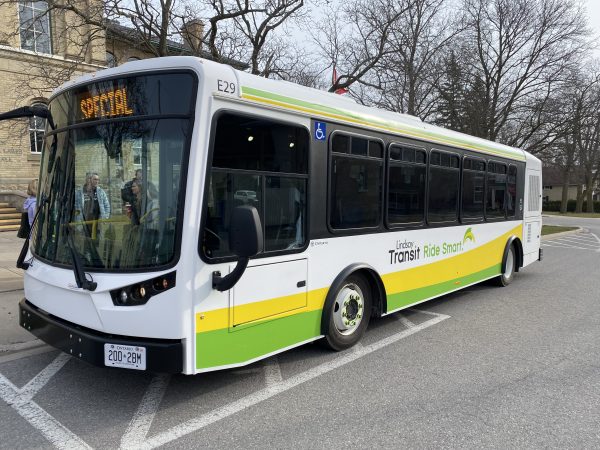
Residents could see significantly expanded public transit during the next decade under a draft plan that would enhance bus service in Lindsay, introduce routes between communities, add connections to neighbouring cities and establish pre-booked transportation service across Kawartha Lakes.
The draft plan was presented to council by Gal Kramer, a transit planner with Via Strategies and Consulting, during its Aug. 25 meeting.

The plan is the result of a study that included consultations with city staff, residents and other stakeholders, and outlines a proposed roadmap for expanding transit services between 2027 and 2036.
Currently, public transit in Kawartha Lakes is limited to Lindsay, where four bus routes and the LIMO specialized transit service operate.
The draft plan identifies four key areas for improvement: redesigning and expanding the Lindsay Transit network by adding two lines and increasing frequency; establishing routes connecting Lindsay with Bobcaygeon and Fenelon Falls; creating connections to nearby municipalities; and introducing microtransit service in rural and lower-density areas.
During public engagement, Kramer told council that the recommendation to provide transit service between Lindsay, Bobcaygeon and Fenelon Falls received the most feedback from residents.
“This is where we heard the most need from the community of where (people) would like to see additional transit connections,” she said.
Under the proposed implementation schedule, the city would begin by redesigning the Lindsay Transit network in 2027. The plan calls for new fixed-route service between Lindsay and Bobcaygeon and Lindsay and Fenelon Falls in 2028.
Also proposed for 2028 is the launch of a citywide, pre-booked microtransit service.
Microtransit uses technology to dispatch vehicles in response to passenger trip requests rather than operating along fixed routes and schedules. The service is intended to create a viable transit option in lower-density and rural areas, where regular bus service may not be feasible.
“If you want to (reach) every single resident, this is the way to do it,” Kramer told council.
The plan also calls for a connection between Lindsay and Peterborough, as well as a future connection to the GO Transit network through either Port Perry or Oshawa. The proposed schedule calls for the Peterborough route to begin in 2029 and the GO Transit connection in 2030.
The expanded network would come with a significant cost. The plan estimates annual operating costs could increase from about $1.96 million in 2026 to nearly $11 million by 2036.
To help pay for the expanded service, the plan identifies several potential funding sources. One of the most significant would be expanding the city’s existing area-rated transit levy, which is currently charged only in the Lindsay area, to all of Kawartha Lakes.
Following the presentation, Ward 3 Coun. Mike Perry lauded the proposed plan, noting that, according to local survey data, access to viable public transit is a top concern for people trying to secure employment.
“We have had information from local residents that (access to) childcare and transportation are tied for No. 1,” Perry said. “I was encouraged to hear about the Fenelon to Bobcaygeon link … as well as the link to Peterborough.”
Ward 4 Coun. Dan Joyce also commended the proposal but added he would like to see a microtransit system prioritized.
Ward 4 occupies the western part of Kawartha Lakes and has a population of about 10,000. Joyce said about 60 per cent of the ward’s residents live outside the main centres, so there is a need for access to transit.
“In phasing in, I am going to submit that microtransit (come sooner), not after, so I’ll be watching this carefully,” he said.
At the moment, council is not being asked to approve either the levy expansion or the proposed transit services.


The plan is certainly comprehensive, but the $84.5-million dollar question — the sum of costs in the plan’s 10-year net new funding table — is whether taxpayers across Kawartha Lakes are ready to pay for it through a transit tax added to their municipal property tax bills.
Today, Lindsay Transit costs about $2 million per year, with Lindsay property owners paying $843,000 transit tax on their tax bills and provincial gas tax funding and fare-box revenue making up the balance.
Lindsay Transit has about 350 boardings per weekday on conventional routes, while LIMO specialized transit provides about 1,000 trips per month. That works out to roughly 103,000 boardings annually, or an average cost of about $19 per trip, with $8 of that from property taxes.
By 2030, when the consultant’s report says buses will connect Kawartha Lakes with Peterborough and Durham Region, the plan’s annual cost reaches $7.6 million.
That is a major increase in spending, based on the expectation that significantly more residents will use public transit. Expanding transit service to every corner of Kawartha Lakes is costly, no matter how you look at it.
So before committing taxpayers to $84.5 million in new funding over ten years, there is one very basic question council needs to answer: if you build it, will they come? Certainly the increase on tax bills will come, that’s a certainty.
It’s ridiculous that there isn’t transportation provided between Lindsay and Toronto/Oshawa, etc., especially with the large growth in population. So many people would use this service for medical appointments, visiting friends and family, going to the theatre, shopping. It would be used! I know a great number of people who have been mystified about this for a long time. I find it hard to believe that it doesn’t exist really. Lindsay has been left out – why?
very good, it is needed.