
Lindsay Training School survivors among those eligible for compensation after Ontario settlement
‘So many kids left those schools broken’
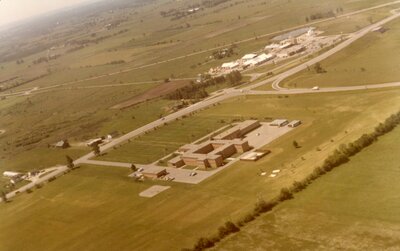
Driving down Kent Street in Lindsay, it’s hard to miss the sprawling complex of the Ontario Court of Justice building. However, in 1962, the building served a much different purpose, and many would say justice was not served in its former incarnation.
Young women from across the province were sent to the Kawartha Lakes School for Girls, one of 18 training schools located across Ontario. The purpose of these schools was to help discipline youth into becoming upstanding citizens; in reality hundreds of students were being verbally, physically, and sexually abused.

A recent lawsuit against the province of Ontario was settled, and those who attended an Ontario Training School are able to receive compensation.
The lawsuit claimed that wards of certain Training Schools were emotionally, physically, and psychologically traumatized by their experiences while attending. The reasons youth were enrolled varied. Some were guilty of criminal acts, but others were just declared truant or unruly by a judge.
“Victims of abuse at Ontario Training Schools were just ordinary kids. They were removed from their families and placed in these schools, where many of them suffered terrible abuse – both physical and sexual,” Warwick Brown, the court-appointed representative plaintiff, said in a statement. “I am so glad we have finally reached a settlement that will bring this action to an end for all class members. I agreed to be the representative plaintiff because I know that so many children suffered in the Training Schools. So many kids left those schools broken. This settlement is about giving those kids a voice.”
Barb Godin grew up in Windsor. At the age of one her parents separated, and she and her siblings were sent to live with different relatives. Godin was sent to live with her mother’s boyfriend’s uncle, George. This was when Godin started to be sexually abused.
Throughout the first few years of her life, Godin was sent from relative to relative. “There was no stability in my life. The home atmosphere with my mother and her boyfriend was dysfunctional; there was lots of drinking and abuse.” She and her sister ended up dropping out of school.
At the age of 12, Godin and her sister were labelled as truants and, after a court appearance, were sent to the Kawartha Lakes School for Girls.
“There was no mention of helping my family or putting us in foster homes; we were sent directly to training school,” Godin said. With bars on the window and solitary confinement, it felt like the setting of movies Godin had watched.
“I learned almost immediately that the way out was to be completely submissive. If you showed even a hint of rebelliousness or independence, you were punished, or at the very least, a note was added to your file saying that you had displayed rebellious behaviour,” Godin said. During her time at the school, she witnessed fights break out and was subjected to solitary confinement for days at a time.
Godin tried to keep her head down and keep to herself, something the other students didn’t like. In one incident, a group of older girls dragged her out of her room and made her stay in the lounge. When she went back to her room, “I couldn’t believe what I saw. Everything was covered with talcum powder: the dresser, the floor, the bed.” She began cleaning so staff wouldn’t see the mess and punish her.
One Lindsay resident, who would only speak with Kawartha Lakes Weekly if granted anonymity, was sent to the school at 15 after running away from home. She was led to believe the school was there to help her recover from her heavy alcohol usage, including being told there would be a rehab section of the school. It quickly became clear to her the school had another purpose.
In the evenings she was given medication that staff said was to help with her withdrawal. Instead, it would leave her paralyzed and, in the night, a male staff member would enter her room and sexually assault her, while she couldn’t fight back.
Even now, in her 60s, if her dog jumps into her bed, the weight on her bed brings her back to the nights she would be assaulted.
On top of that, the students were made to feel like the treatment they received was deserved. “I got told every day to suck it up. ‘You’re in here, you’ll learn your lesson.’”
No one in the woman’s family knows what she experienced in the school, and aside from her therapist and lawyer, she doesn’t plan on letting anyone else know. The woman said while she logically knows what happened to her wasn’t her fault, she carries the shame. “I feel like I have a disease. It doesn’t go away,” she said.
Lisa Loader of the Community Legal Clinic said her firm wants to help victims receive the compensation they’re entitled to. She became aware of this lawsuit while working on a class action settlement against Ontario Hospital Schools, which were schools that housed people with developmental disabilities and also had many allegations of abuse happening inside.
Those looking to participate in the settlement have until next fall to do so. “Most people want to get things done now, because they’ve been waiting for a very long time,” Loader said. “These people deserve compensation; they’re not ever going to be compensated for all that they went through, but they deserve (financial) compensation and recognition.”
The legal clinic does have a financial eligibility criteria, but anyone who doesn’t qualify can still receive advice and support.
On top of compensation, the province issued an apology as part of the settlement.
“Any abuse that kids suffered at these schools was wrong. It was wrong then. It is wrong now. We acknowledge and regret the harm that kids experienced in these institutions,” said Doug Downey, attorney general of Ontario. “While we cannot change the past, we can compensate victims today and hopefully help them as they heal. Moving forward, we must remain vigilant to ensure that these harms become a relic of the past. This action was started in 2017; this government is proud to have been able to resolve it fairly.”
After six months, Godin was released from the school, but she was sent back in 1969 after her grandmother died. “Rather than getting some counselling to help me deal with the loss of a very important person in my life, I was sent back to Lindsay where I spent Christmas 1969.”
Godin said the compensation offered in the settlement isn’t enough for victims, but it’s better than nothing.
She hopes that by sharing her story, which she writes more in-depth about in her memoir Can I Come HOME Now, it can help to end this type of abuse. “We were taken away from our families, and most were never returned. How was that helping children or their families? The system was supposed to be taking care of us. The small settlement we will be receiving does not even touch the abuse we all suffered.”
For more information on the settlement, go to trainingschoolsclassaction.com, and to contact the Legal Clinic call 1-800-461-8953, ext. 0.


Thank you for writing this important story Robyn
I was at Kawartha Lakes 1974-1975. I told anyone that would listen back then. I told a worker how I was injured severely after sexual assault and she told me to say nothing and she would take care of it. Did not see her after. She might have lost her job because of my abusers authority at the school. I told my Youth worker same day I went home and dr a week after. Nothing was done. This story shows that no one cared about us. The authorities all knew but kept there mouth shut, so there job’s would not be at risk. I was sexually abused on a weekly base and one time I sustained a severe injury do to the violent attack. I feel so sad for the victims and the settlement devided pro-rated between so many claims will be a slap in the face. That’s our Government offering us chicken feed just to shut us up and turn the page, make us disapear.