
Our choice for mayor: Charlie McDonald
By Kawartha Lakes Weekly
Municipal campaigns are full of verbs. Cut. Build. Fix. Attract. Improve. The harder verb is deliver.
Five candidates — Ron Ashmore, Mathew Flynn, Doug Ford, David Korn and Charles (Charlie) McDonald — are asking Kawartha Lakes voters to make them the city’s next mayor. Each offers a prescription for change. The question is not simply whether voters like the promise. It is whether the candidate has shown how it can be delivered.

We also approach the question of municipal leadership through this lens: Which candidate has the temperament the role demands, and which one is most likely to use evidence‑based decision‑making?
We commend all candidates for putting their names forward. Their participation is a service to our community and to the democratic process. But three candidates have not demonstrated the readiness required for the mayor’s chair. David Korn spent most of his working life outside the city as an electrician but has long owned property in Fenelon Falls and has deep family roots in the area. At the recent mayoral forum hosted by the Advocate and moderated by Jason Ward, Korn struggled to communicate his points and appeared unfamiliar with key budget numbers that are publicly available. Doug Ford offers the clearest outsider’s critique of city hall. His proposals — a 90‑day guarantee for building permit decisions, a freeze on property taxes and utility rates, an independent audit of city spending, and zero‑based budgeting — are substantial. They also require answers. If taxes are frozen while labour, policing, fuel and infrastructure costs rise, what spending changes? If permit decisions are guaranteed within 90 days, what operational changes make that possible? Ford stuck to his core points but struggled to apply them to the full range of questions posed. Mathew Flynn was a positive surprise during the debate at Celebrations. He came prepared with data from the city budget and offered pragmatic solutions. His balance of confidence and knowledge would serve him well as a councillor. But the mayor’s chair demands political experience he does not yet have.
That leaves Ashmore and McDonald.
Ron Ashmore has the most council experience and offers voters a long list of commitments: Road Complete 2030, higher road maintenance expectations, faster responses from city hall, lower development costs, and a promise to bring GO Transit to Lindsay. His Walmart pledge illustrates why campaign claims deserve scrutiny. On May 1, Ashmore guaranteed Walmart would come to Lindsay in 2027 and said he would travel to the company’s headquarters in Bentonville, Arkansas if elected, if need be. But before that announcement, a major department store proposal at Highway 35 and Sylvester Drive was already moving through the municipal planning process — a process Ashmore had participated in as a councillor. Walmart later announced a 142,000‑square‑foot Supercentre for the site, expected to open in 2028. The public record does not establish that Ashmore knew Walmart was the tenant when he made his promise. That distinction matters. But voters can reasonably ask how much of the outcome was already in motion and how much depended on electing him mayor.
Ashmore is, by all observations, a classic “retail politician” who relies heavily on personal, one‑on‑one interactions with voters. That is not necessarily a bad thing in municipal politics. But the public record also shows moments where that hands‑on style crossed into territory municipal accountability rules are designed to prevent. In June 2021, Ashmore intervened in an active bylaw investigation involving commercial signage. Integrity Commissioner Charles Harnick found he breached three sections of the Code of Conduct, describing the behaviour as “troubling and serious.” Council suspended his pay for two weeks in spring 2022. Ashmore accepted the factual findings but objected to the penalty, saying he was trying to de‑escalate a heated situation. This was not an isolated episode. Ashmore has previously been at the centre of disputes involving municipal oversight bodies, including a 2014 OCPC‑related matter in which his conduct as a member of the Kawartha Lakes Police Services Board was scrutinized. While that episode did not result in a formal finding, it illustrates a recurring tension between Ashmore’s interventionist political style and the structural boundaries placed on elected officials. In a word, we again consider temperament.
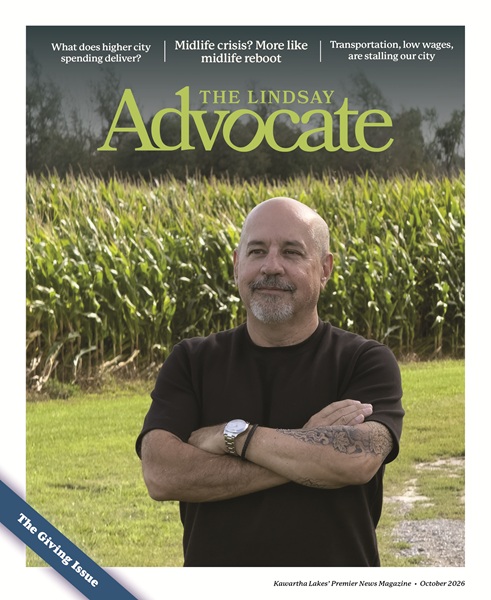
Charlie McDonald presents a different proposition. McDonald has served on council since 2022, including two years as deputy mayor. His record is part of what voters are entitled to examine. Experience inside city hall does not excuse shortcomings residents have experienced — but neither does it automatically mean more of the same. McDonald points to his background in quality control at General Motors and argues that municipal government should identify problems early, measure performance, determine root causes and continuously improve services. As deputy mayor, McDonald led a customer service initiative involving engineering, municipal law enforcement, planning, urban tree services and roads. The work examined turnaround times, set targets and established measurement and reporting. This does not prove city hall’s responsiveness problem has been solved. It does show a model of change based on working through the organization rather than assuming improvement requires dismantling it first.
McDonald brings a steady, procedural understanding of how city hall works. He has consistently shown a calm, professional temperament, avoiding theatrics and focusing on the work in front of him. His message of “raising the bar” reflects what many residents say they want: better performance, clearer process, and a more responsive municipal government. McDonald offers change rooted in quality, not disruption — a practical, disciplined approach to leadership. Essential to that leadership is guiding council itself. McDonald’s established, collaborative relationships with fellow councillors build the constructive partnerships required to move the city forward. Because the deputy mayor is elected directly from among council, McDonald is uniquely positioned to partner seamlessly with the next deputy mayor — delivering meaningful progress through a level of proven collaboration a political outsider simply cannot replicate. The Advocate’s recent ‘Kawartha Lakes Scorecard’ reached a related conclusion: taxpayers need to be shown not only what government spends and does, but what results that activity produces. If a candidate promises faster permits, publish the turnaround times. If the promise is better roads, report whether conditions improved. If efficiencies are found, show the recurring savings. If residents are promised better service, publish response and resolution times. Kawartha Lakes does not need another four years measured mainly by announcements, motions, studies and good intentions. It needs follow-through.
Every candidate is promising change. The real test is which approach can turn promises into measurable results. That is the standard we have applied to this election, along with temperament and following evidence-based decision making. An endorsement is not an instruction on how to vote. It is this newspaper’s considered opinion. After weighing the candidates, their records, their proposals and their approaches to change, we believe Kawartha Lakes needs neither complacency nor disruption for its own sake. It needs measured change: a willingness to challenge what is not working, preserve what is, demand better performance and rebuild trust through results. What Ashmore offers in experience we weigh against temperament and his past political choices. Trust remains one of the most valuable assets any municipal government possesses. It is earned through credibility, follow-through and the willingness to measure promises against results.
On that basis, the editorial board endorses Charlie McDonald for mayor of Kawartha Lakes.

I agree.
No on Chucky
Thank you for this article outlining the qualities of each Mayoral Candidate. The effort you put into informing residents in our community is appreciated. This is an important election- we need strong leadership to manage significant growth in our area and a Mayor who has integrity and the temperament to lead.
Can you afford 7% tax increases for the next 9 years? I doubt many can afford that!
Only Doug Ford addressed the anticipated tax hikes of 7% annually. How will people cope with such huge increases?
Thank you for sharing your stance on the mayoral candidates. After looking at their websites, at a glance the two top contenders seemed close in experience and capabilities. However, the conduct over the years in council chambers and elsewhere will leave many readers understanding your support for Mr. MacDonald is well-founded. We appreciate your insights in this important vote
7% tax increase will put my taxes over $7K . I don’t have a big house. Something has to give. Status quo with making anyone from current council mayor or keep their ward is not it. Also curious as to why comments are being deleted. This article states “AN OPINION “ . Not sure why people in the community are not able to express theirs here. Free speech?